
The foundation beneath a portable building does far more than provide a level surface. In Northwest Florida, where sandy soils, heavy rains and high winds are the norm, choosing the right foundation is the difference between a structure that lasts decades and one that quickly becomes a maintenance headache.
For storage sheds, garages and workshops, the best foundation is always one designed for local conditions, not just what’s cheapest or fastest to set up.
Foundation Options for Portable Buildings
Most quality portable buildings in the Panhandle are supported on one of three main foundation types:
- Compacted gravel pads
- Concrete slabs
- Concrete blocks or piers
Each option has its place, depending on the size of the building, intended use, site conditions and budget. Methods like setting a building directly on bare soil, plastic bases or untreated wood are not really suitable anywhere, but it’s an especially bad idea on the Gulf Coast and should be avoided, even temporarily.
All of these foundation types are designed to support portable buildings constructed on pressure-treated wood skids. The skids distribute the building’s weight and elevate the floor system above ground moisture, which is key for longevity in a humid coastal climate.
Compacted Gravel Pads
Gravel pads are one of the most practical and cost-effective foundations for portable sheds and mid-sized buildings in the Panhandle.
Pros:
- Provides excellent drainage, helping prevent water from pooling under the shed and minimizing rot risk.
- Quick to install and easy to maintain.
- Allows for future leveling adjustments if minor settling occurs.
- Well-suited to most small and medium storage buildings.
Cons:
- Requires periodic re-leveling if the site experiences erosion or settling.
- Not the best choice for extremely large, heavy buildings or where high traffic requires a solid surface.
Best Uses:
- Storage sheds
- Hobby shops
- General-purpose portable buildings
- Sites with well-drained soil
Concrete Slabs
A concrete slab offers maximum stability and durability, especially for larger or heavier buildings, carports and garages.
Pros:
- Delivers the most stable, permanent foundation with greater resistance to settling and movement.
- Ideal for supporting vehicle storage, heavy equipment or commercial operations.
- Provides a smooth, level surface that simplifies access.
Cons:
- Higher upfront cost and more involved site preparation.
- Overkill for small sheds where flexibility or cost savings matter.
- Once poured, a slab is permanent. Although future relocation of the shed is still possible, the slab will remain in place.
Best Uses:
- Garages
- Large workshops
- Commercial storage
- Buildings with roll-up doors
- Sites where heavy loads are routine
Concrete Blocks and Piers
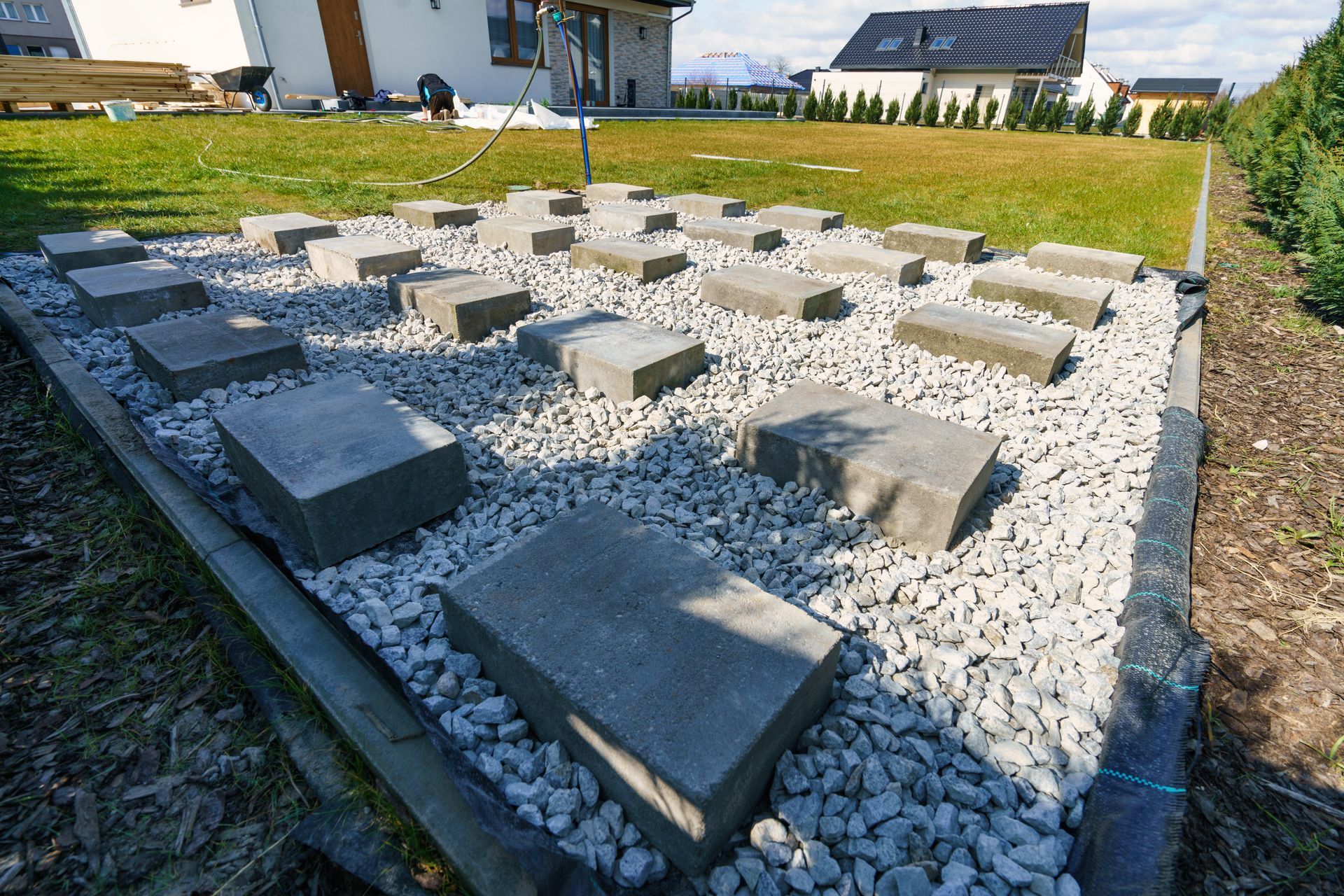
Concrete blocks or piers provide a simple, elevated foundation, which is why it is often the preferred choice for smaller or temporary buildings. Although piers can be used on their own, they are frequently installed in combination with a compacted gravel pad to create a level, well-drained base and help prevent settling over time.
Pros:
- Budget-friendly and quick to install.
- Lifts the building above ground level, encouraging airflow beneath the floor.
- Useful for sites with uneven terrain or where rapid setup is required.
Cons:
- Less stable under high wind loads unless properly anchored.
- Can settle unevenly if the site is not well-prepared or has shifting soils.
- Not recommended for large or high-traffic structures.
Best Uses:
- Pump houses
- Small utility sheds
- Short-term or low-traffic installations
Why Bestway Recommends These Foundations for the Panhandle
Bestway Portable Buildings’ approach to portable building installation is based on decades of experience with local soils, drainage and weather extremes.
- Compacted gravel and concrete pads both allow water to drain away quickly, which is essential for combating high humidity and minimizing rot.
- Concrete slabs add a layer of permanence and strength for the largest, most demanding applications.
Combining these foundations with pressure-treated skids keeps buildings elevated and stable for maximum durability and longevity.
Less durable options, like placing a shed directly on soil, using untreated lumber or skipping site preparation, almost always lead to premature failure.
Blocks and piers have a place for small or temporary uses, but we always recommend professional-grade anchoring and site prep to ensure wind stability and long-term performance.
Get a Portable Building, Pole Barn or Storage Shed Foundation That Lasts
In Northwest Florida’s demanding climate, the foundation beneath your portable building is just as important as the structure itself. Choosing the right base and having it installed by a team who knows the region means less maintenance, fewer surprises and more years of dependable use.
For expert advice on choosing and preparing the right foundation for your next portable building, contact Bestway Portable Buildings at (850) 747-8974.