If you live in the Panama City area, you’ve probably decided the advantages of Gulf Coast living outweigh the challenges. Although not as problematic as storms, the unavoidable environmental realities of coastal living can become annoying and expensive.
Sand works its way into everything, saltwater sticks around long after gear is “dry,” and the heat inside a building can warp or fade items faster than expected. Having a storage building for coastal gear can save you money on replacements and make maintaining your equipment a lot easier.
Coastal Gear Is Bigger, Heavier and Harder on Storage Space
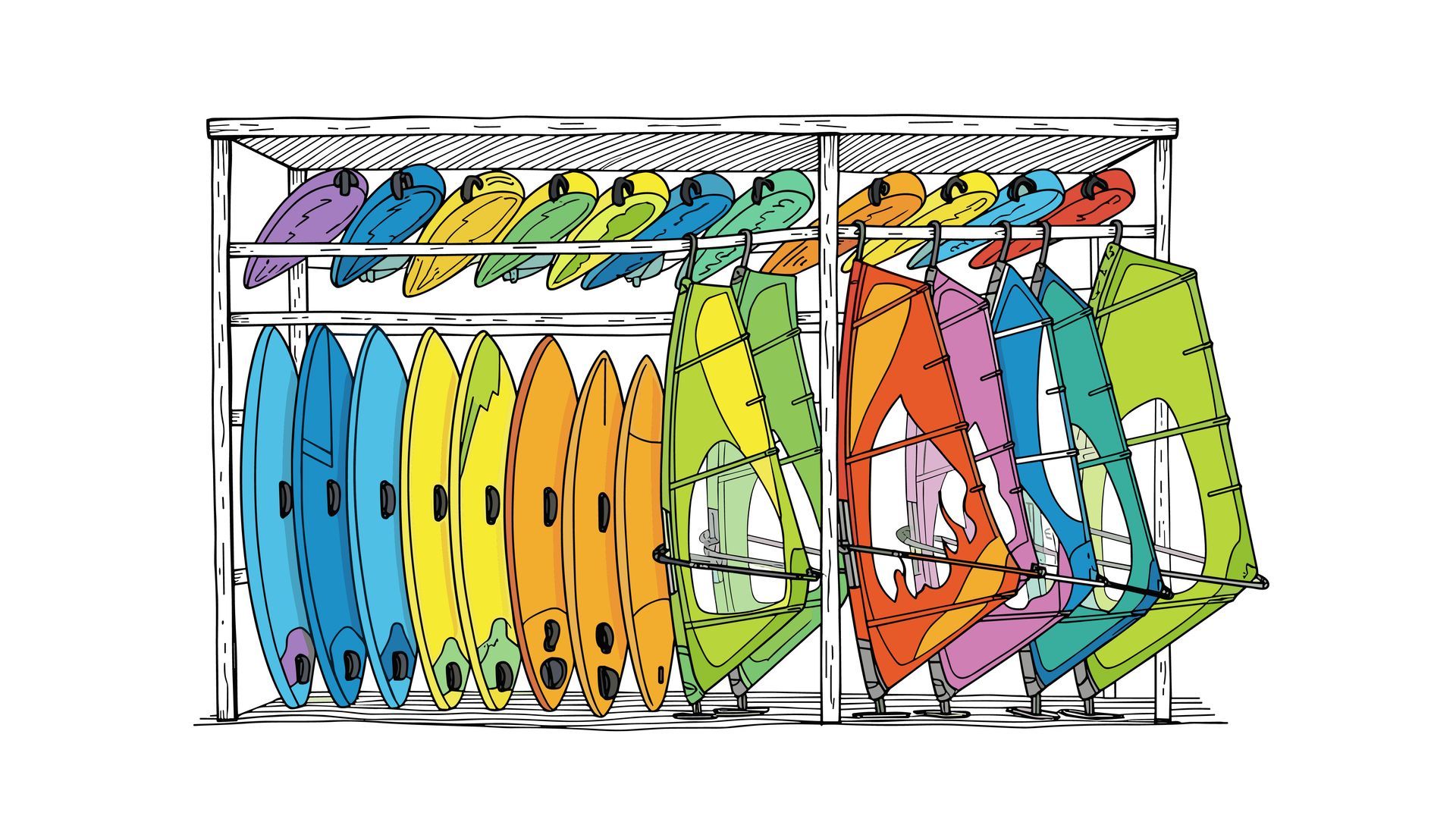
Most Florida Panhandle homes deal with equipment that’s bulkier than what inland owners store. A typical weekend might have you moving things that aren’t easy to carry or keep organized, such as:
- Beach carts loaded with coolers, chairs, umbrellas, toys and towels
- Long surf rods and large tackle boxes
- Cast nets, buckets, aerators and launch gear
- Kayaks, paddleboards, paddles and inflatables
- Anchors, dock lines and fuel cans
Gear like this needs wider openings, room to maneuver and storage layouts that handle weight without wearing down the flooring. If your storage building ends up being used more like a small gear garage, choosing a size and configuration that can handle heavy loads will pay off.
Sand Always Finds a Way Inside
The coarse sand on Gulf beaches clings to everything and falls off the moment you lift gear. Coolers, carts, shoes, surf rods, cast nets and fishing bags will leave a trail straight into the building. Once inside, sand settles into corners and grinds into the floor every time you drag something across it.
Most coastal owners settle into a few habits that make the ever-present imposition of sand easier to live with:
- Shake out towels, beach toys and soft-sided coolers before storing them
- Keep a couple of bins or tubs near the door for sandy items
- Leave a stiff broom or boot brush close to the entrance
- Keep a doormat or rubber mat just inside the threshold to catch the first and heaviest round of sand
If the prevailing wind on your property blows sand toward the building, facing the door in the opposite direction can help keep new sand from piling up at the entrance.
Dealing With Saltwater Dampness
Saltwater stays on gear long after it leaves the beach or boat ramp. Cast nets, life jackets, bait buckets, wetsuits, kayak seats and fishing shoes hold moisture and salt that transfers to anything they touch. Storing this gear where it has space to dry keeps both the building and the equipment in better shape. If you are using a portable building for storage, set up areas where you can:
- Hang life jackets instead of stacking them
- Store nets and ropes over drip trays or buckets
- Keep dedicated bins for “still wet” gear
Heat and Sun Affect Stored Gear Long After It’s Indoors
Afternoon heat inside a storage building can climb fast in the summer. Soft plastics, adhesives, certain rubbers and kayak accessories don’t hold up well when they’re exposed to high temperatures for weeks at a time. Surf rod grips can soften, tackle can warp and anything with foam or resin degrades faster in hot interiors. Try to store heat-sensitive gear off the floor where airflow is better, and ensure your portable shed builder incorporates good ventilation.
Salt Corrosion Doesn’t Stop Indoors
Salt particles left on pliers, tools, anchors and metal hardware keep reacting until they’re rinsed off or treated. If you’re storing salt-exposed items in a building, a quick freshwater rinse or wipe-down before putting them away saves both the gear and the flooring.
Durable flooring in portable storage buildings should be able to withstand drips, spills and salt residue that come from everyday coastal use.
Managing the Coastal Mess Cycle
A building set up for coastal use works best with a few predictable habits: a broom by the door, bins for sandy items, mats to catch drips and a quick routine for rinsing gear before it goes inside.
Fuel cans, bait buckets, and anything with strong smells usually stay near the entrance so they’re easy to grab without carrying residue deeper into the building. You may also want to ask your builder about ventilation options and whether they have the capabilities to add more if dampness is going to be a regular concern.
Invest in Durable Portable Storage Buildings That Can Stand up to the Coastal Environment
If you need a storage building that can safely store beach, yard and fishing gear in real Gulf Coast conditions, Bestway Portable Buildings is here to help. Call us at (850) 747-8974 to learn more about our custom portable building options or to request a quote.